 BLOGS
BLOGS
Balanced Nutrition & Product Formulation | Ace International
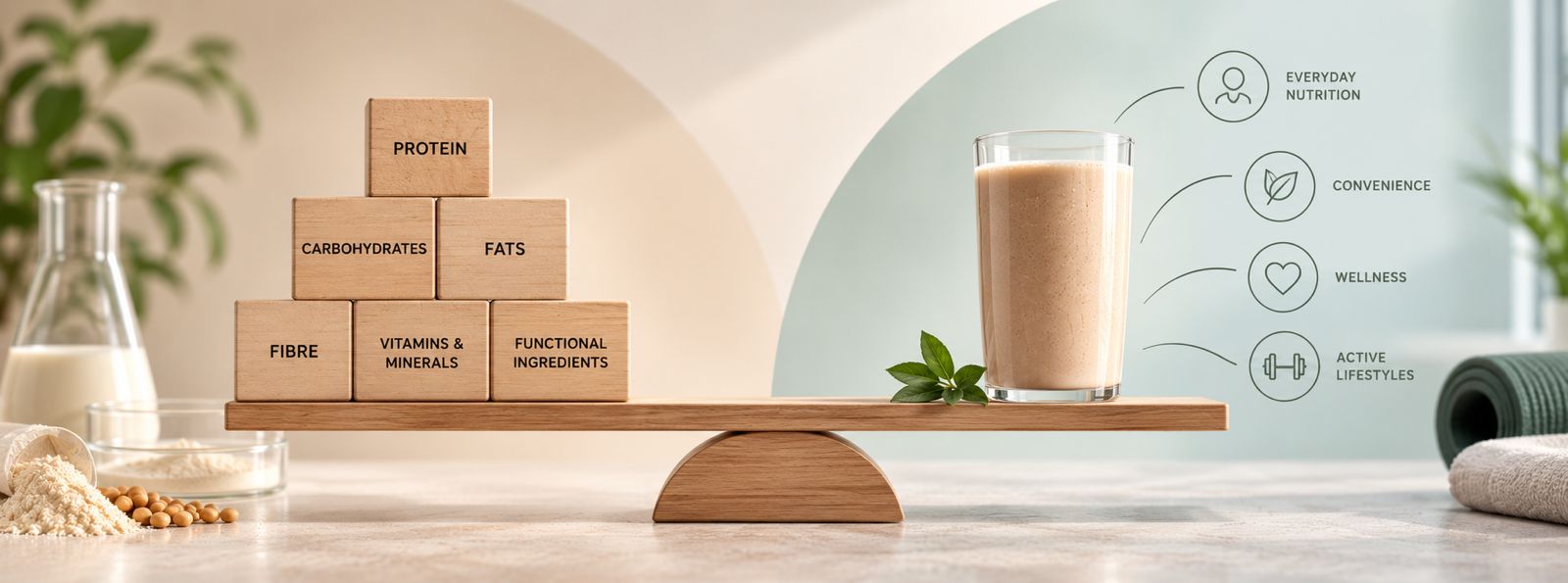
Balanced Nutrition Is a Formulation Decision: Designing Better Nutrition Products
Nutrition is often communicated through numbers.
Protein. Fibre. Carbohydrates. Fats. Vitamins. Minerals.
These numbers matter. But when developing a nutrition product, no single number tells the complete story.
A product with more protein is not automatically a better product. Neither is one with more fibre, fewer carbohydrates or a longer list of micronutrients. What matters is whether those components come together in a way that delivers the intended nutrition while still creating a product consumers will actually want to use.
That is why balanced nutrition is ultimately a formulation decision.
Moving Beyond the “More Is Better” Approach
Protein provides a good example.
Growing consumer interest in high-protein foods and beverages has made protein content an increasingly visible product claim. Yet increasing protein levels can influence far more than the nutrition panel.
Depending on the application, it can affect texture, viscosity, solubility, flavour, stability and processing behaviour. The same interconnected relationship exists across carbohydrates, fats, fibres, minerals and other functional ingredients.
For formulators, the question therefore cannot simply be:
How much protein can we add?
It needs to be:
What does this product need to deliver, and what is the right nutritional composition to achieve it?
That distinction changes the formulation conversation.
There Is No Universal Formula for Balanced Nutrition
A ready-to-drink nutritional beverage, powdered supplement and meal replacement may all contain similar nutrient categories, but their formulation priorities can be very different.
The intended consumer matters. So does the consumption occasion, processing method, desired sensory profile and final product format.
A formulation that looks nutritionally strong on paper still needs to perform in the real world. It must withstand processing, remain stable throughout its intended shelf life, deliver the desired taste and texture, and be practical to manufacture consistently.
There is therefore no single formula for better nutrition.
There is a right formulation for the intended purpose.
Ingredient Choice Becomes Part of Product Design
This is also why ingredient selection should go beyond nutrient contribution.
A protein may need to provide nutritional value while contributing to mouthfeel or functionality. A fat source can influence both energy density and sensory experience. Fibres may contribute nutritional benefits while affecting viscosity or texture. Minerals and micronutrients need to be considered not only for their nutritional role, but also for how they behave within the complete formulation.
Ingredient selection therefore becomes less about building a list and more about designing how those ingredients work together.
At Ace International, this is how we view nutrition formulation: start with the nutritional and product objective, then build the ingredient solution around it.
Our portfolio across dairy proteins, plant proteins, functional ingredients and customised nutritional base powders allows us to support different product formats and nutritional requirements.

Better Nutrition Is About the Right Balance
As nutrition products evolve, headline nutrient numbers will remain important. But the next stage of innovation will increasingly depend on what sits behind those numbers.
Can the nutritional profile meet the needs of the intended consumer? Can the ingredients work together effectively? Can the product deliver the expected sensory experience?
And can all of this be achieved consistently at commercial scale?
A strong formulation does not maximise every component. It makes deliberate choices about what each ingredient needs to contribute.
Because better nutrition isn't simply about adding more. It is about choosing the right ingredients, in the right combination, for the right product.
Looking to Develop Your Next Nutrition Product?
Ace International works with food, beverage and nutrition manufacturers across dairy proteins, plant proteins, functional ingredients and customised nutritional solutions.
Connect with our team to discuss your formulation requirements: sales@aceinternational.co.in
Latest Blogs
-
 Aug 31, 2025 > By Ingredient Spotlight
 -
 Oct 04, 2025 > By Innovation
 -
 Oct 04, 2025 > By Ingredient Spotlight
 -
 Nov 27, 2025 > By Press Release
 -
 Apr 13, 2026 > By Thought Leadership
 -
 May 04, 2026 > By Thought Leadership
 -
 Jun 05, 2026 > By Ingredient Spotlight
 -
 Jul 16, 2026 > By Thought Leadership
 -
 Sep 07, 2026 > By Thought Leadership